
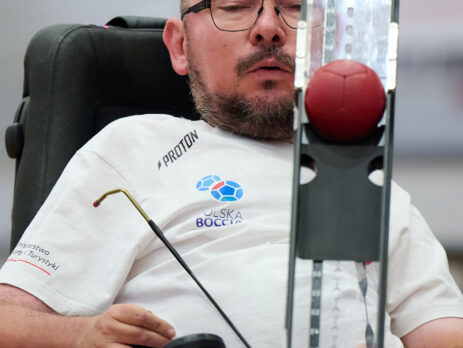
How not to play boccia: 40 mistakes that cost points
🇵🇱 Polska wersja: Jak nie grać w boccię — 40 błędów, które kosztują punkty
Contents
- Tactical mistakes
- 1. You don't play enough
- 2. You throw before you've decided what the end is for
- 3. You play for the point when you should play for position
- 4. You spend balls "improving" a good situation
- 5. You break when you're ahead
- 6. You don't count your opponent's balls
- 7. You play the last ball the same way you played the first
- 8. You ignore the jack as a target
- 9. You don't build blocks
- 10. You always play the same side of the court
- 11. You don't change the plan after a failed shot
- Technical mistakes
- 12. You change your technique mid-match
- 13. You throw too hard "just in case"
- 14. You don't control the first bounce
- 15. You match the wrong hardness to the shot
- 16. You play with balls you don't know
- 17. You don't warm up
- 18. Bad position in the chair
- 19. (BC3) You set the ramp by eye
- 20. (BC3) Poor communication with your assistant
- 21. You don't check your balls before the match
- Mental mistakes
- 22. You play on emotion after a bad throw
- 23. You speed up under pressure
- 24. You analyse mid-shot
- 25. You play the opponent instead of the court
- 26. You lose focus between ends
- 27. You're afraid to break
- 28. You treat a lost end as a lost match
- 29. You have no pre-throw routine
- Equipment and organisation
- 30. You don't know the rules you're losing on
- 31. You don't watch the clock
- 32. You pack your equipment badly
- 33. You neglect your balls — or "look after" them in a way that gets you disqualified
- 34. You always train on the same surface
- 35. You don't play practice matches
- 36. You train without a plan
- 37. You buy balls for this season instead of the next one
- 38. Don't train from memory — measure your mistakes
- Instead of guessing — check
- 39. Don't cheat — not your opponent, and not yourself
- 40. The biggest mistake: playing every ball on its own
Boccia is a game you rarely lose through lack of skill. You lose it by repeating the same decisions. Below are 40 mistakes that cost points — tactical, technical, mental, and everything around the game: equipment, training and rules. This is not a beginner’s list. Most of these are made by players who have been competing for years.
Tactical mistakes
1. You don’t play enough
Before we get to tactics, technique and equipment, the least comfortable thing has to be said first: most players simply don’t play enough. None of the advice on this list will work for someone who picks up the balls once a week at club training.

Players in the World Boccia top 100 play every day, two to three hours. Not twice a week for ninety minutes. Every day. That is the level at which the throw stops requiring thought and becomes a reflex — and only then does the head have room for tactics.
The arithmetic is merciless. Two sessions a week at ninety minutes is three hours. A player training two hours daily has fourteen. Over a year that is the difference between roughly a hundred and fifty hours on court and seven hundred. At that distance it does not matter who owns better balls or who knows more shot types.
The good news is that those two hours don’t have to happen in a sports hall. A court fits in a living room, a corridor, a day-room. Distance control needs a few metres and a mat. Accuracy needs a jack, a few balls and patience. Forty minutes a day at home plus two club sessions puts you ahead of most of your competition.
2. You throw before you’ve decided what the end is for
The first ball leaves the hand and the player still doesn’t know whether they’re playing for one point, for two, or simply to lose as little as possible. Everything you do over the next five throws depends on that decision. Before you move to the box, answer one question: what counts as a good result in this end today?
3. You play for the point when you should play for position
Your opponent has one ball very close to the jack; you still have four. You try to get closer and burn three balls doing it. Far more often the better move is placing a ball that blocks their line or gives you a good angle to break with your last one.
4. You spend balls „improving” a good situation
You lead 2–0 in the end and keep throwing to make it 3–0. Every extra ball is a chance to move something and hand the end back. When the end is already won, the most valuable ball is the one you don’t throw.
5. You break when you’re ahead
Breaking is a high-risk shot. It makes sense when you’re losing. When you’re ahead, it usually opens up a layout your opponent will use better than you.
6. You don’t count your opponent’s balls
How many balls they have left versus how many you have is the single piece of information that genuinely changes the value of every shot. A player holding the last ball plays a completely different game from one holding three. If you’re not tracking it, you’re deciding blind.
7. You play the last ball the same way you played the first
The last ball is special: nothing answers it. It is the one moment when the risky shot is often the rational one, because your opponent has no time to punish it. The opposite goes for the first ball, which should above all be safe.
8. You ignore the jack as a target
The jack is not fixed. Moving the target ball into an area where you hold the advantage is often more effective than adding another ball where your opponent already has three.
9. You don’t build blocks
A ball placed in front of a cluster takes away the line your opponent needs. A block doesn’t have to score to win you the end — it only has to make the answer impossible.
10. You always play the same side of the court
Every player has a comfortable line, and every opponent works it out within two ends. If you never change the side you attack from, you’ve made their defence easy.
11. You don’t change the plan after a failed shot
The shot didn’t come off, so you throw the same one again, harder. Meanwhile the layout on court is already different and so is the number of balls left. A failed shot is information, not a reason to repeat it.
Technical mistakes
12. You change your technique mid-match
Two balls go wrong, so you change the grip, the swing, the release point. Now nothing is calibrated and you have no reference for what went wrong. Technique is changed at training, never at 2–4 down in the fourth end.
13. You throw too hard „just in case”
Extra force is the most common way of covering up uncertainty about distance. The ball arrives, passes everything and ends up behind the jack. A short ball leaves you a layout to work with; a long one leaves you nothing.
14. You don’t control the first bounce
Where the ball first touches the floor decides almost everything that follows. Players watch the target and never the landing point. Pick the spot the ball should land on, not the spot it should stop on.
15. You match the wrong hardness to the shot
Soft balls stop quickly and are for blocking and holding position. Harder balls roll out and are for breaking and pushing through. Playing a whole match with one hardness means half your shots are made with the wrong tool.
16. You play with balls you don’t know
New balls behave differently on the first day than in the third month. If a tournament is the first time you’ve seen how far they run, you’re learning the equipment instead of playing the match. Balls need to be broken in long before they’re needed.
17. You don’t warm up
Boccia looks static, which is exactly why players skip the warm-up. The first end is then spent finding the range, and the first end counts the same as the last. Ten minutes of throws before the match is the cheapest point you’ll ever buy.
18. Bad position in the chair
Seat height, backrest angle, how far you sit forward — all of it decides the geometry of the throw. A player who sits differently each time throws differently each time. Set the position once, measure it, and reproduce it at every session.
19. (BC3) You set the ramp by eye
A ramp set approximately produces approximate results. Angle and height are numbers, and numbers can be repeated. Write down the settings that work and rebuild them, instead of hunting for them again in every end.
20. (BC3) Poor communication with your assistant
The assistant cannot see the court and must not look at it. Everything they do comes from your words. Vague instructions produce vague placements. Agree on a fixed vocabulary — units, directions, reference points — and use the same words every time.
21. You don’t check your balls before the match
Referees check hardness, size and weight, and a ball that has gone out of tolerance is withdrawn from play. Finding that out at the check-in table means starting the tournament with an incomplete set. Test the balls at home, not in front of the referee.
Mental mistakes
22. You play on emotion after a bad throw
The ball goes badly and the next one is thrown to make up for it. That is how one lost ball turns into a lost end. The shot after a mistake should be the safest one you have, not the bravest.
23. You speed up under pressure
The tighter the score, the faster players throw — the opposite of what the situation requires. Pressure is the moment to use your full time, not to give it away.
24. You analyse mid-shot
Thinking belongs before the throw. Once the arm is moving, a second thought only breaks the rhythm. Decide, then execute — never both at once.
25. You play the opponent instead of the court
Watching who you’re against rather than what’s on the floor leads to shots chosen out of respect or fear. The layout doesn’t know your opponent’s ranking.
26. You lose focus between ends
The break between ends is where matches are quietly lost. Players switch off completely and come back cold. Use the gap to read the next end, not to leave the match.
27. You’re afraid to break
Breaking carries risk, so it gets avoided even when the situation demands it. Refusing the shot is also a decision — usually the losing one. An end you can’t win by placing is an end you have to win by breaking.
28. You treat a lost end as a lost match
Boccia is played over several ends precisely so that one bad one doesn’t decide anything. A four-point end costs four points; carrying it into the next end costs the match.
29. You have no pre-throw routine
A routine is what makes the throw repeatable when the hall is loud and the score is close. The same sequence before every ball is worth more under pressure than any amount of talent.
Equipment and organisation
30. You don’t know the rules you’re losing on
Time violations, throwing out of turn, crossing the line — points are given away on rules players have never read, not on shots they couldn’t make. Read the World Boccia rulebook once properly; it costs an evening and saves whole ends.
31. You don’t watch the clock
Time is part of the game, not an administrative detail. A player who ignores it ends up rushing the last two balls in every end. Know how much time one ball actually takes you — measure it at training.
32. You pack your equipment badly
Balls squeezed under other gear deform. A set carried loose in a bag arrives at the tournament in a different shape than it left. Balls travel in a case or a backpack with a hard insert, never at the bottom of a holdall.
33. You neglect your balls — or „look after” them in a way that gets you disqualified
Dirty, greasy balls behave unpredictably; a damp cloth and drying at room temperature is the whole of correct care. What is not care is anything that changes how the ball behaves: heating, freezing, softening, weighting, filing, or treating the surface. Modifying balls is not a grey area — it is manipulation of equipment, and it ends in disqualification.
The same goes for what you put into your own body. Para sport is covered by anti-doping rules in full, and a medicine taken for entirely ordinary reasons can contain a prohibited substance. If you take prescribed medication, check it against the current prohibited list and, where required, arrange a Therapeutic Use Exemption before the competition — not after a positive test.
34. You always train on the same surface
A ball runs differently on parquet, on sports vinyl and on a taped court in a school hall. A player who only ever trains at home arrives at a tournament with the wrong distance calibration. Change surfaces deliberately, so that adapting becomes a skill rather than a surprise.
35. You don’t play practice matches
Drills build the throw; only matches build decisions. Without an opponent there is no pressure, no clock and no consequence. Technique practised without matches is technique you can’t use.
36. You train without a plan
An hour of throwing whatever comes to mind feels like training and produces almost nothing. Every session should have one thing you are working on and a way of telling whether it improved.
37. You buy balls for this season instead of the next one
New balls need months to settle before they behave predictably. Buying them just before the season means playing your most important tournaments on equipment you don’t yet know. Order a season ahead, break the balls in during the quiet months, and start the season with a set you can trust.
38. Don’t train from memory — measure your mistakes
Almost everything on this list depends on one thing: knowing what you actually do, rather than what you think you do. Players remember their good throws and forget the pattern in the bad ones. A record of ends, shots and results turns a vague sense of „it wasn’t going well today” into a specific answer about which shot type fails and in which situation.
Instead of guessing — check
This is what Boccia ProTrainer was built for: recording matches and training, counting shot types and showing where points are actually lost. The app is free for 14 days, with no card required — long enough to see your own pattern rather than take our word for it.
39. Don’t cheat — not your opponent, and not yourself
Moving a ball with a foot or a wheel, an assistant glancing at the court, a jack nudged while measuring, an extra second taken when nobody is looking — these are the small things that decide whether the sport is worth playing at all. They are also the things everyone eventually notices.
Cheating yourself is quieter and more common: counting a lucky throw as proof of technique, skipping the part of training you’re bad at, explaining away a defeat with the surface or the referee. A player who is honest about their own mistakes improves; one who isn’t repeats them for years.
40. The biggest mistake: playing every ball on its own
All the previous thirty-nine come down to this one. An end is not six separate throws — it is one sequence in which every ball creates the situation for the next. A player who decides ball by ball is always reacting. A player who plans the end throws the first ball already knowing what the fourth is for.
Stop playing balls. Start playing ends.
Polecane produkty
Skarpetki bawełniane I love boccia – czerwone i niebieskie, rozmiar 39-42 lub 43-4619,5 złZobacz produkt → Plecak na bile do boccii Prolimpic MasterPack Paryż 2024 – OUTLET149 złZobacz produkt →
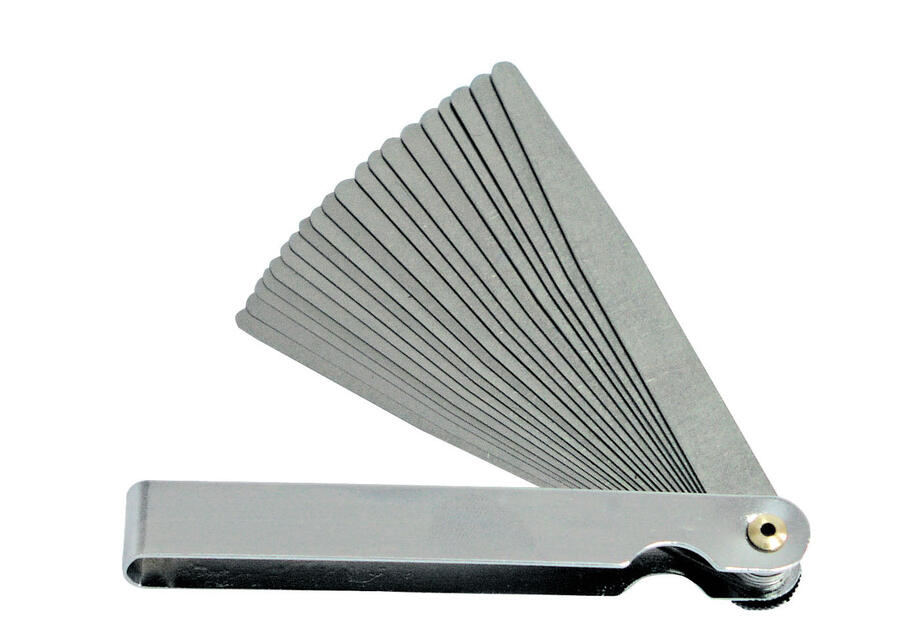 Nowy Profesjonalny Certyfikowany szczelinomierz do gry w boccia – Boccia Precision Meter25 złZobacz produkt →
Dodaj komentarz